The paintings below, all by contemporary Black artists, remind us deeply of Sabrina and Lena. We’re especially responding to the ways that these large scale portraits elevate their subjects, reminding us of the significance of everyday people’s lives — especially the lives of Black women — much the same way that Inda does throughout the play.
Middle school and high school quiz bowls are common across the country. Here in Boston, WGBH has produced and aired the popular High School Quiz Show for the past 13 seasons — an academic general-topics competition which is, in many ways, typical of the form. But the Know Your Heritage quiz bowl featured in Black Super Hero Magic Mama is specific to the version that existed for decades in Chicago, focused primarily on African American history.
Know Your Heritage
Here’s how Know Your Heritage works…
Two teams consisting of four students (each team from one high school in Chicago) competed in a yearly tournament to win $1,000 college scholarships as well as trips to Walt Disney World as rewards for their knowledge of black history.
Questions were presented in multiple choice format with four possible answers, with point values in varying amounts. The team that rang in first would have the chance to answer it and had to give the letter and answer; giving the letter alone was not acceptable.
The questions ranged from primarily ethnic history, with a few grab-bag categories thrown in.
Next was the huddle up round where a question was asked and up to 10 answers were shown and the teams would have one minute to pick which of the answers were correct and were awarded based on number of correct guesses.
The final round consisted of how many points each team was willing to wager. They would do so during the second-to-last commercial break. One player from each team would walk up to the host’s podium and the question was presented. They would have a time limit in which to put the answer down; when time expired, both players would close their notebooks (laptops in newer episodes).
This series is broken into different sections like most quiz bowls:
• “Chicago Challenge” (Introduced 2008) – All the high schools competed in 10 minute intervals, usually two matches per episode, until 16 teams remained. • “Chicago Survivors” – The 16 high schools competed against each other until eight were left. • “Chicago’s Elite” – Quarterfinals match, in which the remaining eight competed until four winning teams were left. • “Chicago’s Noble Four” – Semifinals match, where the two winning teams advanced to the finals. • “Who’s Who in Chicago” – The finals round where the two winning teams competed for the grand prize stated above. • Special “All Star” episodes aired at the end of each season. Versions included the losing two teams from the final four, students versus faculty from the high school of the winning team, or two teams of Chicago celebrities.
“Slipping From Paradise,” a large-scale hand-made paper piece combines Saar’s interest in the process of hand-made paper and the iconography of the occult. Such universal symbols as lightening, the crescent moon, the planet Saturn, a snake, an open palm, and the four card suits are depicted in vivid colors. – Curatorial notes from Pennsylvania Academy of the Fine Arts
Two views of “Guardian of Desires” — Verso and Front, 1988
One of Saar’s altar structures, in this piece “a strangely ominous figure stands [on the front], mummified with a half cat, half skull face. The background is made from a circuit board that resembles the night sky with stars and a variety of constellations. Yet, despite the works apparent whimsy, it is also dark and mysterious. Like many of Saar’s works, “Guardian of Desires” can be viewed from the front or the back; the rear of the sculpture revealing a more sinister narrative with small silver body parts hanging like limbs from the trees. There is an obvious association with the lynching of young black men in the South, yet there is also a deeply spiritual sensibility at work here as these shapes, as with the human souls lost during that horrendous and bloody time in our human history, are fortified through loss which is emblematic in the tarnishing of the silver.” — Africanah.org
“Guardian of Desires” Verso, by Betye Saar, 1998. Part of the 2020 online exhibition, MIT and the Spiritual Component of Technology, via Roberts Projects LA
“Guardian of Desires” Front, by Betye Saar, 1998. Part of the 2020 online exhibition, MIT and the Spiritual Component of Technology, via Roberts Projects LA
We’re really digging works by contemporary artists — like the performance of Grief Objects from last week — and have been exploring resonances between various artworks’ subjects and the characters within the play. The dramaturgy team will be sharing images in a series of posts as a way to continue to provide new pathways into the emotional topography of the play and its story. Enjoy!
* * *
In the rehearsal room, we’ve been thinking a lot about ancestral knowledge/blood memory as a counter to ancestral trauma. Our conversations brought the work of Betye Saar to mind, especially her 1969 assemblage “Black Girl’s Window” (see below).
Artist Jasmine Weber writes in the online journal Hyperallergic: “‘Black Girl’s Window,’ Saar says, is a self-portrait. ‘It tells about my past, present, and future,’ she explains. ‘Inside of each pane, I put something that I felt had to do with my life. Her complicated thoughts about destiny, fate, and the internal conflict of her Black and white ancestry are imbued in the imagery behind the black silhouette.”
On the occasion of Saar’s retrospective at MOMA in late 2019, Weber/Hyperallergic returned to the topic. Weber notes, of the currently-95-year-old artist (emphasis mine):
Saar has been equal parts philosophical, mystical, and political since the nascence of her artistic career. At 40 years old, Saar began her foray into assemblage — the aggregation of objects into the shrine, totems, and sculptures that she is best known for — after a visit to the Pasadena Art Museum (now the Norton Simon Museum), where she first encountered the sculptures of Joseph Cornell. His artworks […] piece together paper, found objects, and gems into surreal cornucopias.
Already studied in design and graphics, Saar soon began to fasten her own fantastical dioramas in picture and window frames. She treated them as open portals into which she could build new, dimensional worlds out of objects with personal, spiritual, and historical charge. Saar finds great inspiration in her heritage, embedding tokens of her Black, Irish, and Native American ancestry alongside symbols of astrology and mysticism (the artist’s astrological sign, Leo, appears consistently throughout the exhibition), metaphysically juxtaposing the inner and the outer self, the earthly and the celestial.
A definitive presence in Saar’s work is the legacy of antiblackness; she names the assassination of Dr. Martin Luther King Jr. as the stimulus for her political artworks.
About this particular artwork, Jasmine Weber continues:
Framed by a worn wooden window, nine small boxes create stages for nine small scenes: two young Black children embracing; stars and moons; an aged daguerreotype of Saar’s maternal grandmother; a lion. The silhouette of a woman with a close-cropped afro, a stand-in for Saar, peers out of a whispy curtain. Her eyes, made of a lenticular, shift and blink, oscillating between intimate and external. It’s all in the eyes; the shifting, gazing, reflecting eyes.
It’s tempting to not snap the window’s latch and let it all out; it hums with energy. This is an artwork that’s living. It has a soul in the most literal sense — each of Saar’s assemblages carries a bit of her. Many Black women, myself included, can see themselves in this work.
L.R. Knost quote that reads: ‘Generational patterns are woven into the fabric of our lives. But they are not set in stone. Fabric can be unraveled, tears mended, knots untangled. And a new pattern can be tenderly and intentionally begun. We are the story-weavers of this generation. May we wield our looms with the bravest love and fiercest hope imaginable.’
In the rehearsal room, the cast and team of Black Super Hero Magic Mama are getting ready to delve deeper into the world of the play and learning more about their characters. While breaking down the text and understanding more about the references in the play, we are also holding discussions around trauma and its effects on BIPOC communities.
In this post, we’ll talk about generational trauma and they ways in which members of the BIPOC community are interrupting the cycles of harm and on the journey towards healing.
Generational Trauma
Generational Trauma is defined by medical professionals as “trauma that isn’t just experienced by one person but extends from one generation to the next.”
In What Is Generational Trauma? Here’s How Experts Explain It, generational trauma can manifest in people as “hypervigilance, a sense of a shortened future, mistrust, aloofness, high anxiety, depression, panic attacks, nightmares, insomnia, a sensitive fight or flight response, and issues with self-esteem and self-confidence.”
Often the roots of generational trauma stem from traumatic experiences repeated generation after generation such as racism, poverty, the effects of war, and violence. In other cases, generational trauma can manifest after the experience of losing a loved one; which some professionals have named Complicated Grief Disorder.
What are the ways generational trauma is interrupted or healed in the BIPOC community?
With a rising trend of BIPOC-identifying folks seeking therapy, many seek therapists who identify as BIPOC and practice some form of radical healing or center trauma-informed practices. While acknowledging that there are still barriers of access to therapy & professional mental health resources, some members have taken to creating communal spaces (whether online or in person) to share resources and to create systems of support.
Like any good superhero play, there are PLENTY of fights. Thanks to our spectacular fight choreographer Margaret Clark, the actors are absolutely killing it. Here’s your sneak peek, below.
Attention actors: you can find your exemplar videos under the C1 Biz menu, on the Fight Choreopage (password protected).
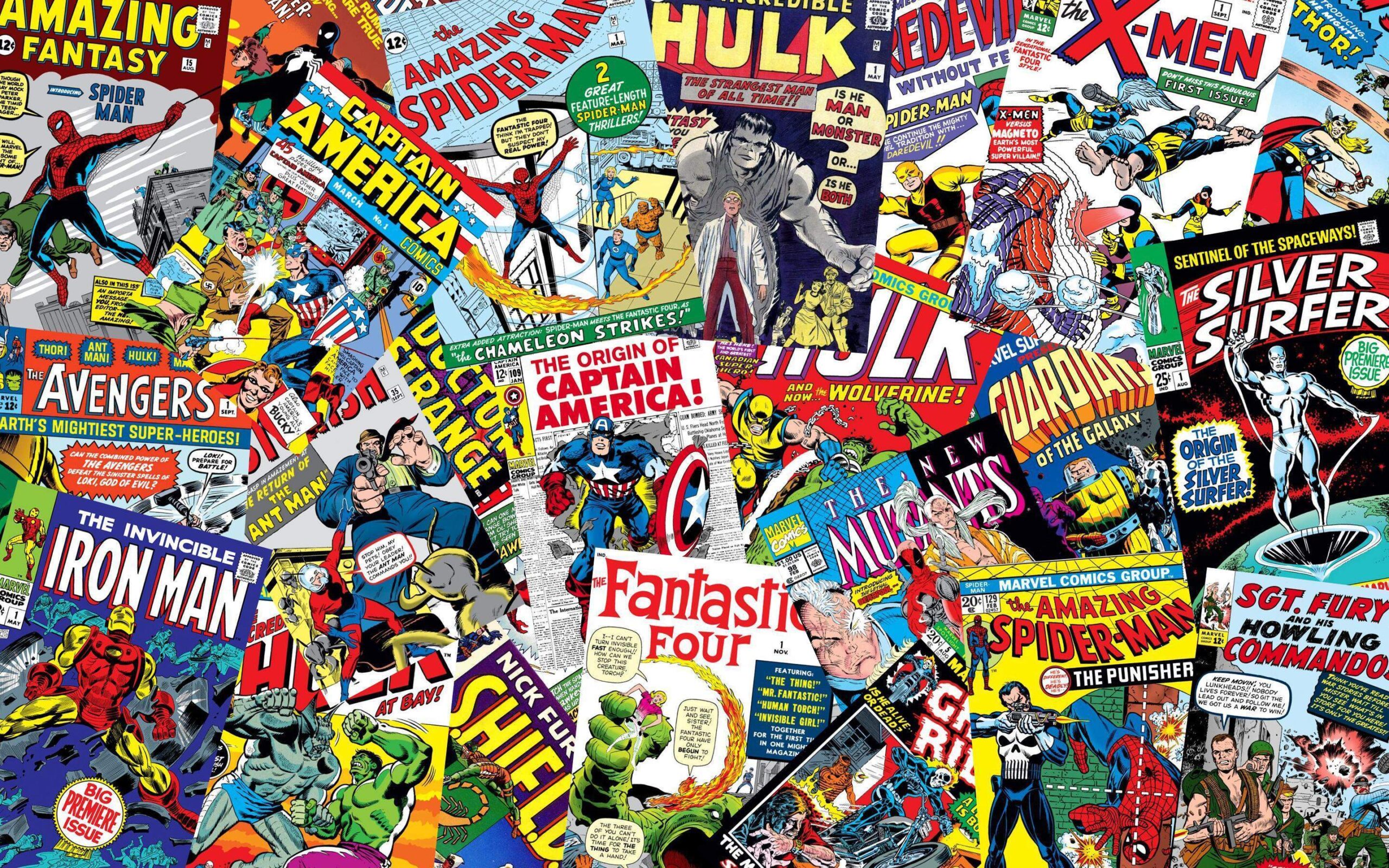
Comic Book Day: the most valuable comic books in the world // Verdict.co
Marvel, DC, and Dark Horse Comics are some of the top, most well-known comic book companies today, publishing popular comic series such as The Avengers (Marvel), Superman (DC), and Hellboy (Dark Horse).
But where do comics originate from?
From the National Museum of American History, some scholars believe that comics originated as early as the 1930s, appearing as books with reprinted newspaper strips. It wasn’t until 1938 that superheroes were introduced into original comic books like Action Comics No.1.
Gaining traction during World War II, in an effort to boost morale and patriotism, comic book superheroes such as Captain America, Superman, and Batman were born. During this time, the Golden Age of Comics skyrocketed with new genres, characters, and styles through the mid-1950s.
Out of this era, emerged Black comic creators like Clarence ‘Matt’ Baker, who created one of the first Black comic heroes, Voodah, who first appeared in Crown Comics #3 (1945). During this time Matt Baker was one of the few Black, Golden-Age comic artists who pioneered the comic art medium quietly behind the scenes. And opened doors for modern-day pioneers: Denys Cowan, Dwayne McDuffie, Kyle Baker, and Christopher Priest.
Fast forward to today, independent, Black comic book publishers such as Lockett Down Productions and Black woman comic creators are entering the spotlight and taking the comic book world by storm in creating more diverse and inclusive representation in storytelling. With Black superheroes and comic series like Ironheart, Black Panther, and Shuri (Marvel) gaining traction in popularity, we see the influential impacts of the Black imagination in comics; especially with the rise of Afrofuturistic aesthetics (more to come in a future blog post!).
Company One Theatre has been based at the Boston Center for the Arts for more than a decade, and one of the best things about it has been the opportunity to connect with other resident and visiting artists on the campus (like our longtime studio neighbor, Elisa Hamilton!). In a true moment of serendipity, we realized that the BCA’s Spring 2022 Run of the Mills residency — which culminates in 2 performances this week — is deeply connected to the thematic work we’re undertaking in our own rehearsals. And we’re rehearsing just feet away from the BCA’s Mills Gallery. What luck!
Laila J. Franklin has created Grief Objects, a “multidisciplinary gallery walk and performance” that invites audience members to “explore a collection of personal objects — physical and digital — that have been archived in grieving processes over the last 3 years in a space activated by live dance and sound performers.”
The play Black Super Hero Magic Mama takes us through a harrowing journey of a mother’s grief, her fight to reclaim her own mind, and perhaps to heal. That journey is catalyzed by the comic book her murdered son created. As a “grief object,” the comic book possesses enormous charge and power. We’re so curious, how will resident artist Laila J. Franklin reckon with the similarly changed flotsam of life after a loss? The pre-show materials for Grief Objects offer this prompt:
Why do we hold onto these objects? How do the objects of grief constantly object to grief? When do they become gifts?
This Friday, our cast members and dramaturgs will attend Grief Objects. We can’t wait to see how Laila’s work might illuminate our own explorations of grief and healing.
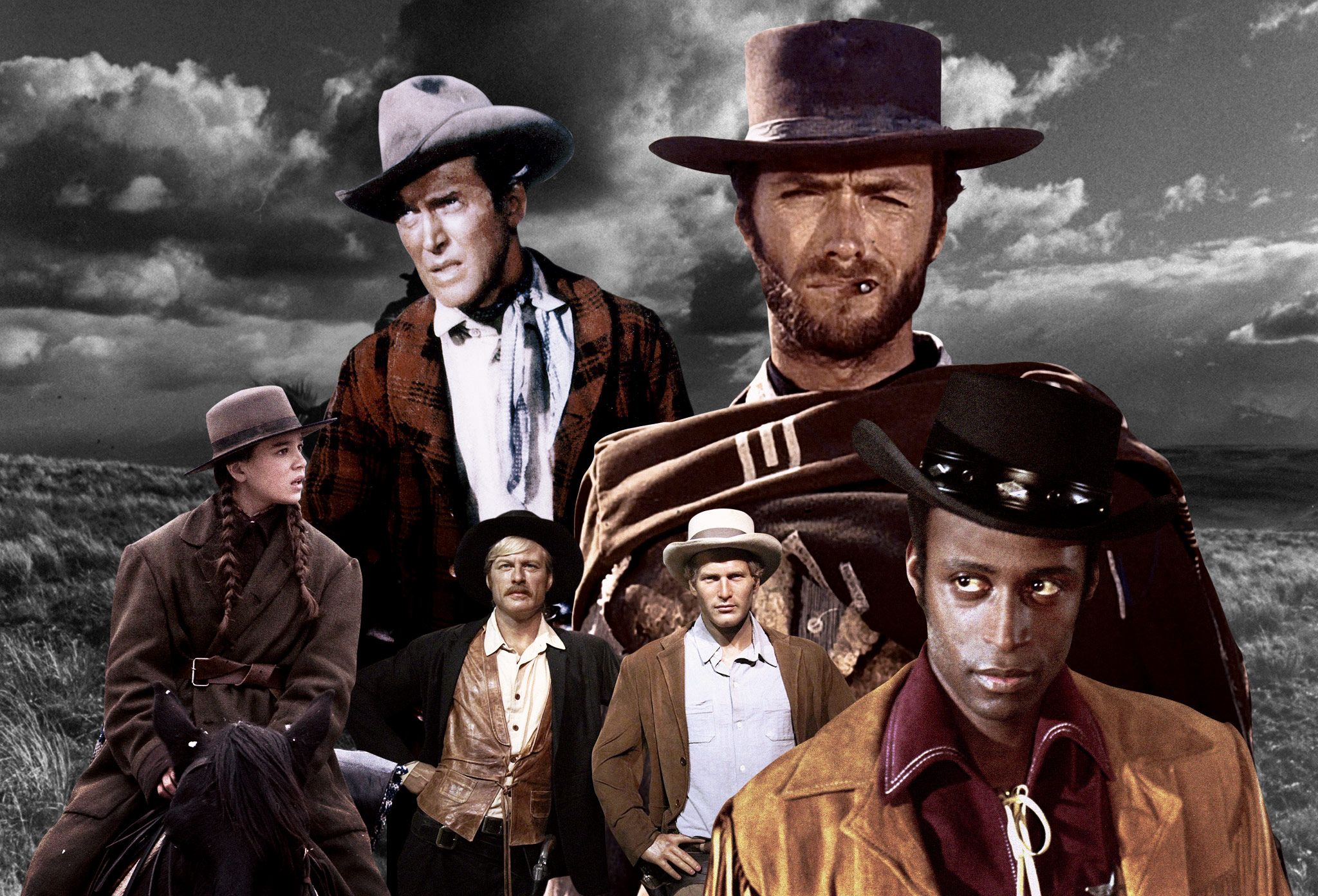
Photo-Illustration: Maya Robinson/Vulture and Photos Courtesy of Studios, Getty Images and Shutterstock. Vulture.com
The Western genre has been an integral part of American pop culture, with some of its tropes present in Inda Craig-Galvàn’s Black Super Hero Magic Mama.
Often centering conflict and adventure, the Western genre explore themes such as morality, justice, and the resistance to modern change (The Script Lab). They also emphasize a stoic hero who embodies honor and sacrifice, and in the end saves the day.
The Cowboy, often noted as a Western Hero archetype, is associated with being a lone wolf who lays down the law, and is always looking for the next adventure. In films like Blazing Saddles (1974) and True Grit (2010), cowboys are lone rangers, preachers, bounty hunters, or even the town sheriff (Click here for other Wild West Archetypes in Storytelling).
We’re starting our rehearsal process for Black Super Hero Magic Mama by revisiting and adapting a series of posts that we first wrote for the Company One Theatre 2020 production of Hansol Jung’s Wolf Play. Though the scripts are wildly different, they share a deep investigation of trauma, and how it manifests in the body and mind. First, we’ll take a look at some foundational concepts around trauma, including the differences between PTSD (post traumatic stress disorder) and C-PTSD (complex/childhood ptsd), and how that connects to the play. In a separate post, we’ll get specific about generational trauma, and racial traumas.
***
Below is a useful excerpt from a New Scientist article on Bessel Van Der Kolk’s indispensable book about trauma and its impact on our physical selves: The Body Keeps The Score.*
What has killed more Americans since 2001 than the Afghanistan and Iraq wars? And which serious health issue is twice as likely to affect US women as breast cancer? The answer, claims psychiatrist Bessel van der Kolk, lies in what we now understand about trauma and its effects. In his disturbing book, The Body Keeps the Score, he explains how trauma and its resulting stress harms us through physiological changes to body and brain, and that those harms can persist throughout life. Excess stress can predispose us to everything from diabetes to heart disease, maybe even cancer. […]
Van der Kolk draws on 30 years of experience to argue powerfully that trauma is one of the West’s most urgent public health issues. The list of its effects is long: on mental and physical health, employment, education, crime, relationships, domestic or family abuse, alcoholism, drug addiction. “We all want to live in a world that is safe, manageable… predictable, and victims remind us that this is not always the case,” says van der Kolk. When no one wants to hear about a person’s trauma, it finds a way to manifest in their body.
And it is not only extreme experiences that linger. Family disturbance or generalised neglect can wire children to be on high alert, their stressed bodies tuned to fight or flight. Or they may be so “numbed out” by keeping demons at bay they can’t engage with life’s pleasures or protect themselves from future trauma. Even parents who don’t attune with their children can do untold damage, van der Kolk argues.
Maria Popova, on her exquisite website Brain Pickings, also delves into The Body Keeps the Score:
Trauma, Van der Kolk notes, affects not only those who have suffered it but also those who surround them and, especially, those who love them. He writes: “One does not have be a combat soldier, or visit a refugee camp in Syria or the Congo to encounter trauma. Trauma happens to us, our friends, our families, and our neighbors. […] It takes tremendous energy to keep functioning while carrying the memory of terror, and the shame of utter weakness and vulnerability.”
In trauma survivors, Van der Kolk notes, the parts of the brain that have evolved to monitor for danger remain overactivated and even the slightest sign of danger, real or misperceived, can trigger an acute stress response accompanied by intense unpleasant emotions and overwhelming sensations. Such posttraumatic reactions make it difficult for survivors to connect with other people, since closeness often triggers the sense of danger. And yet the very thing we come to most dread after experiencing trauma — close contact with other people — is also the thing we most need in order to regain psychoemotional solidity and begin healing. Van der Kolk writes: “Being able to feel safe with other people is probably the single most important aspect of mental health; safe connections are fundamental to meaningful and satisfying lives.”
This, he points out, is why we’ve evolved a refined mechanism for detecting danger — we’re incredibly attuned to even the subtlest emotional shifts in those around us and, even if we don’t always heed these intuitive readings, we can read another person’s friendliness or hostility on the basis of such imperceptible cues as brow tension, lip curvature, and body angles. But one of the most pernicious effects of trauma is that it disrupts this ability to accurately read others, rendering the trauma survivor either less able to detect danger or more likely to misperceive danger where there is none. Paradoxically, what normalizes and repairs our ability to read danger and safety correctly is human connection. Van der Kolk writes: “Social support is not the same as merely being in the presence of others. The critical issue is reciprocity: being truly heard and seen by the people around us, feeling that we are held in someone else’s mind and heart. For our physiology to calm down, heal, and grow we need a visceral feeling of safety. No doctor can write a prescription for friendship and love: These are complex and hard-earned capacities. You don’t need a history of trauma to feel self-conscious and even panicked at a party with strangers — but trauma can turn the whole world into a gathering of aliens.”
On the subject of dissociation, and other ways traumatized people navigate the world, Popova writes [note: emphasis below is mine]:
Drawing on his work with patients who have survived a variety of traumatic experiences — from plane crashes to rape to torture — Van der Kolk considers the great challenge of those of us living with trauma: “When our senses become muffled, we no longer feel fully alive. […] In response to the trauma itself, and in coping with the dread that persisted long afterward, these patients had learned to shut down the brain areas that transmit the visceral feelings and emotions that accompany and define terror. Yet in everyday life, those same brain areas are responsible for registering the entire range of emotions and sensations that form the foundation of our self-awareness, our sense of who we are. What we witnessed here was a tragic adaptation: In an effort to shut off terrifying sensations, they also deadened their capacity to feel fully alive.”
While this dissociation from the body is an adaptive response to trauma, the troublesome day-to-day anguish comes from the retriggering of this remembered response by stimuli that don’t remotely warrant it. Van der Kolk examines the interior machinery at play:
“The elementary self system in the brain stem and limbic system is massively activated when people are faced with the threat of annihilation, which results in an overwhelming sense of fear and terror accompanied by intense physiological arousal. To people who are reliving a trauma, nothing makes sense; they are trapped in a life-or-death situation, a state of paralyzing fear or blind rage. Mind and body are constantly aroused, as if they are in imminent danger. They startle in response to the slightest noises and are frustrated by small irritations. Their sleep is chronically disturbed, and food often loses its sensual pleasures. This in turn can trigger desperate attempts to shut those feelings down by freezing and dissociation.”
Roberto Schmidt / Getty Images
Which leads us of course to Black Super Hero Magic Mama‘s central trauma for Sabrina/Maasai Angel, and the traumas experienced by many other characters (proximity to a police shooting, generational/ancestral traumas, racism, the suffering of loved ones, profound grief, familial ruptures, being the cause of someone else’s suffering, etc).
Bessel van der Kolk writes in The Body Keeps the Score [note: emphasis below is mine]:
If you have a comfortable connection with your inner sensations — if you can trust them to give you accurate information — you will feel in charge of your body, your feelings, and your self.
However, traumatized people chronically feel unsafe inside their bodies: The past is alive in the form of gnawing interior discomfort. Their bodies are constantly bombarded by visceral warning signs, and, in an attempt to control these processes, they often become expert at ignoring their gut feelings and in numbing awareness of what is played out inside. They learn to hide from their selves.
The more people try to push away and ignore internal warning signs, the more likely they are to take over and leave them bewildered, confused, and ashamed. People who cannot comfortably notice what is going on inside become vulnerable to respond to any sensory shift either by shutting down or by going into a panic — they develop a fear of fear itself.
Maria Popova continues her summation of the book, this time tackling the role of trauma in childhood — an experience that can often result in complex/childhood post traumatic stress disorder, or C-PTSD. In the context of Black Super Hero Magic Mama, Tramarion importantly is not a victim of C-PTSD. The play demonstrates he has a deep and secure attachment with Sabrina. Even though he suffered the trauma of his father’s early death, the family support of Sabrina and Lena protect Tramarion. Flat Joe on the other hand may be closer to C-PTSD if his family life is unstable, as indicated in the play. Is it his relationship with Tramarion that provides the stability and brotherly care to keep the echoes of generational trauma from opening Flat Joe’s door to C-PTSD? For Sabrina and Lena, we don’t know a lot about their joint childhood, but the strength of their sisterly bond has carried them through Andre’s death, at the very least, and undoubtedly many more societal/cultural traumas encountered throughout their lives.
How we respond to trauma, Van der Kolk asserts, is to a large extent conditioned by our formative relationships with our caretakers, whose task is to help us establish a secure base. Essential to this is the notion of attunement between parent and child, mediated by the body — those subtlest of physical interactions in which the caretaker mirrors and meets the baby’s needs, making the infant feel attended to and understood. Attunement is the foundation of secure attachment, which is in turn the scaffolding of psychoemotional health later in life. Van der Kolk writes:
“A secure attachment combined with the cultivation of competency builds an internal locus of control, the key factor in healthy coping throughout life. Securely attached children learn what makes them feel good; they discover what makes them (and others) feel bad, and they acquire a sense of agency: that their actions can change how they feel and how others respond. Securely attached kids learn the difference between situations they can control and situations where they need help. They learn that they can play an active role when faced with difficult situations. In contrast, children with histories of abuse and neglect learn that their terror, pleading, and crying do not register with their caregiver. Nothing they can do or say stops the beating or brings attention and help. In effect they’re being conditioned to give up when they face challenges later in life.”
[…]
“All of us, but especially children, need … confidence that others will know, affirm, and cherish us. Without that we can’t develop a sense of agency that will enable us to assert: “This is what I believe in; this is what I stand for; this is what I will devote myself to.” As long as we feel safely held in the hearts and minds of the people who love us, we will climb mountains and cross deserts and stay up all night to finish projects. Children and adults will do anything for people they trust and whose opinion they value. But if we feel abandoned, worthless, or invisible, nothing seems to matter. Fear destroys curiosity and playfulness. In order to have a healthy society we must raise children who can safely play and learn. There can be no growth without curiosity and no adaptability without being able to explore, through trial and error, who you are and what matters to you.”
A venn diagram of PTSD and C-PTSD. (Ignore the qualifier “simple” in this infographic.)
* * *
* I should note here that I felt this book by Bessel van der Kolk — a Boston area psychiatrist and researcher — to be revelatory and eye opening, so it was a major disappointment to discover that van der Kolk had been fired from his own institute in 2018 over charges of hostile work environment and bullying. His contributions to the field of trauma research and treatment have been significant, but that impact should be taken with knowledge that the field is split on its relationship to his legacy.





 Black Super Hero Magic Mama by Inda Craig-Galván